
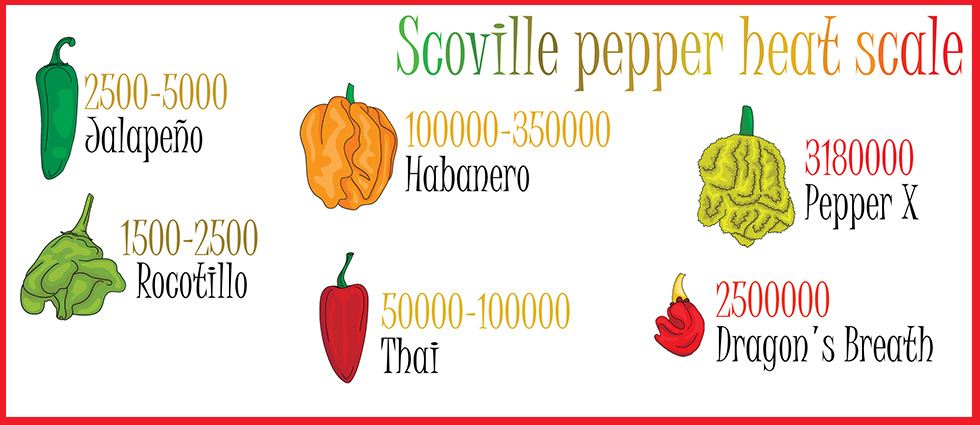
Yes—there actually is a way to tell how hot a pepper is before you eat it. The most common way is by using something called the Scoville scale, which measures how spicy a pepper is. The number is called Scoville Heat Units (SHU). The higher the number, the hotter the pepper. While people experience spice and heat differently, this scale gives a reliable way to compare peppers.
The Scoville scale was created in 1912 by a pharmacist named Wilbur Scoville. Back then, they tested heat by diluting pepper extract with sugar water in very tiny increments until people could no longer taste the heat. The more it had to be diluted, the hotter it was rated. While innovative for its time, this method was subjective and varied depending on the sensitivity of the tasters.
Today, scientists use precise lab equipment to measure the exact amount of heat-causing chemicals called Capsaicinoids in a pepper, and converts them to Scoville Heat Units (SHU). This makes the results much more accurate. The formula itself is best saved for another time.
Think of Capsaicinoids as the “family” of compounds that make peppers taste hot. The primary member of the family is capsaicin, which creates most of the burning feeling. Capsaicin is found mostly in the white inner part of the pepper (not the seeds). Many people think seeds are the hottest part, but they only seem hot if they get coated with the capsaicin oil. If you want to reduce heat but keep flavor, remove the white inner ribs—not just the seeds. Freezing peppers does not lower the capsaicin levels over time.
The heat you feel isn’t actual burning—it’s your body reacting to capsaicin activating pain sensors, and that feeling can last up to 90 minutes. At typical culinary levels, this is harmless and even beneficial for some people (e.g., mild metabolism boost, possible cardiovascular benefits). Also, even the same type of pepper can vary in heat depending on how and where it was grown.
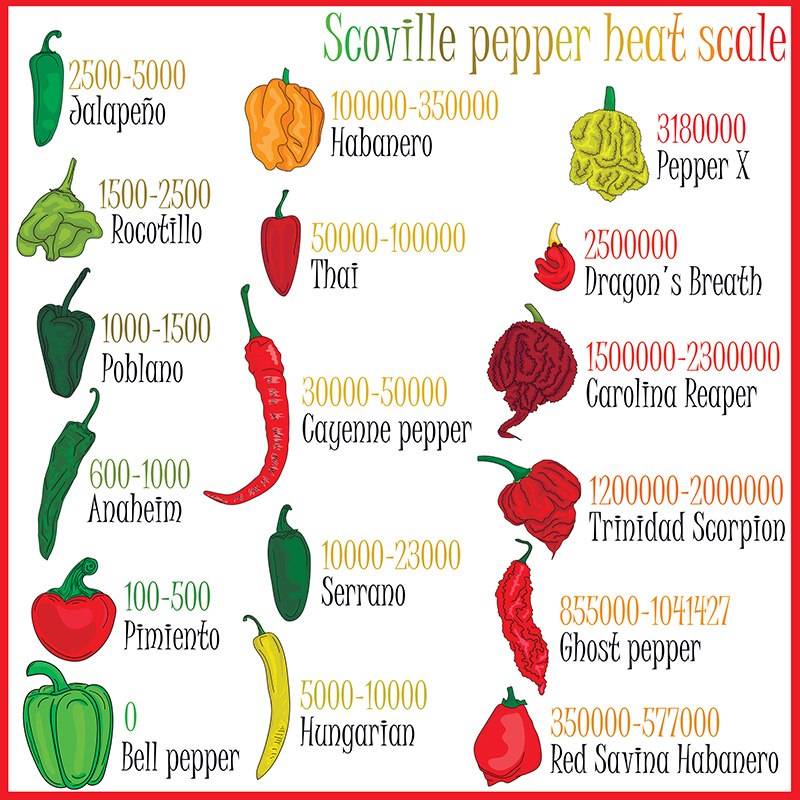
Peppers range widely in heat. Bell peppers have 0 SHU (no heat), jalapeños are around 2,500–8,000 SHU, and extremely hot peppers like the Carolina Reaper can exceed 2,000,000 SHU. Anything above about 500,000 SHU is considered extremely hot and not really everyday food. This level or higher can also result in a trip to the emergency room, depending on the level of capsaicin and amount ingested at one time, so pepper challenges are never a good thing. Understanding the Scoville scale helps you choose peppers that match your comfort level and avoid unpleasant surprises.